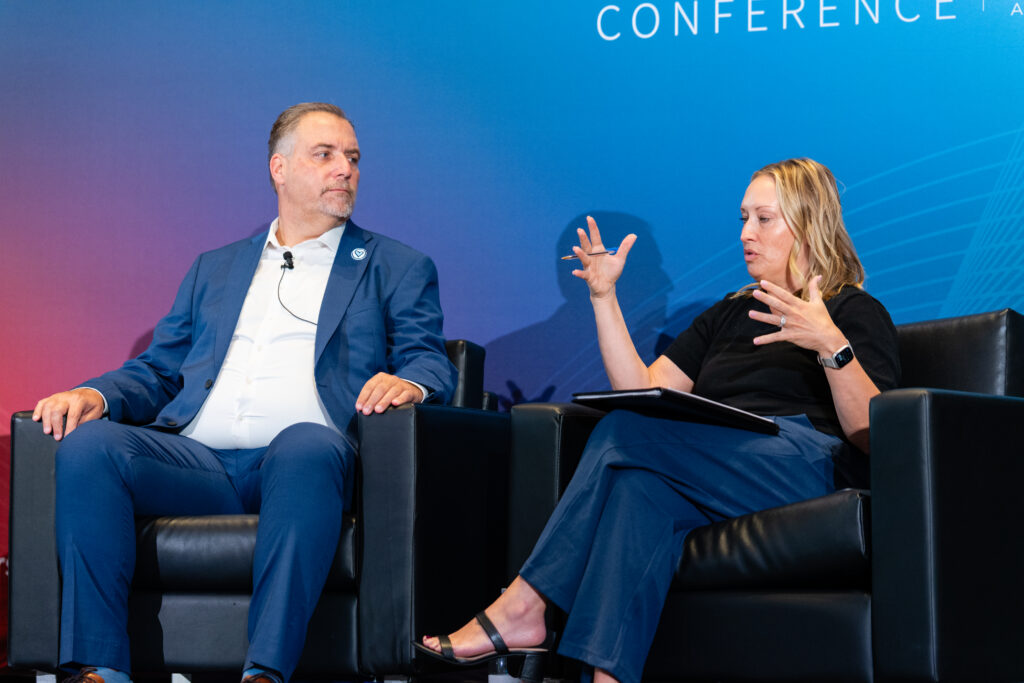
While the staffing landscape has leveled off for a lot of nursing home operators, it’s still a tough market.
The sector is moving on from an acute staffing emergency to more of a slow burn problem, figuring out how to build capacity and make recruiting efforts more efficient, said Elizabeth McLaren, SVP of revenue cycle, reimbursement and home and community-based services (HCBS) at Covenant Living Communities and Services. Time before a position is filled has decreased considerably at Covenant, but just about one in four candidates ghost the company after the offer.
“A lot of the staffing challenges can differ between urban and rural. But I think it’s also different between frontline staff and nursing staff, then licensed staff versus MDS coordinators and DONs,” said McLaren. “That’s where we’re really struggling. We have longer times to fill those types of positions.”
Recruiting and retention strategies based on role are something Journey Skilled Nursing is focused on as well – starting with the certified nursing aide (CNA), CEO Bernie McGuinness told Skilled Nursing News.
“As a guy who started as a CNA and a nurse, I come from that clinical side,” said McGuinness. “We really need to honor that frontline caregiver, the CNA, and the nurse, right? That role is crucial to our care delivery right now. How do we celebrate the role, the art of being a caregiver, so that we can make being a nurse cool again?”
Journey’s Skills Summit is modeled after America’s Got Talent, with national leaders in the sector like former American Health Care Association and National Center for Assisted Living (AHCA/NCAL) CEO Mark Parkinson and current AHCA/NCAL CEO Clif Porter as judges, and in another case, Journey was able to get a Hollywood actress as a judge.
“I’d like her followers to maybe see that being a nurse is cool, right? Because we need more nurses. We need more young people entering our space,” said McGuinness. “We’re doing recruitment and branding on TikTok and Instagram, and we launched our YouTube channel.”
Journey hopes its launch on the second-most popular search engine in the world will catch the attention of younger generations.
Covenant recognizes how important online recruiting and hiring application platforms are for younger generations too, and work on all smartphones.
“We realized the form we were using wasn’t translating to an iPhone. If we can’t make it easy for them, that’s another way that we drop in recruiting. We had to learn a hard lesson,” McLaren told SNN.
Staffing challenges are needing long-term strategies
Covenant hasn’t figured out the staffing secret sauce yet, she said, but it’s clear that sector leaders need to be thinking more in terms of long-term strategies rather than being in crisis mode.
Journey’s acquisitions have had a lot of agency staffing, McGuinness said, and while urban markets generally have more staff, recruiting means taking from another provider, hospital or health care system.
“There’s not enough nurses out there to fill all our needs, so we’re really robbing Peter to pay Paul when it comes to recruiting,” said McGuinness. “And for some of our places in rural Georgia, it’s difficult to find RNs in the county, or a physical therapist, a speech therapist in some of these markets. We have to get creative. I think it’s better than it was five years ago, but it’s still a very tough landscape.”
Covenant started internal workforce risk assessments at each of their buildings to identify issues. McLaren learned that staff were looking for career growth, and that executives needed to invest more in frontline leader development and internal mobility.
“We have great transitions from noncertified care attendants to CNAs and to licensed practical nurses (LPNs). But then after that, we don’t have a lot of opportunity … we don’t have a lot of managers leaving the organization, but then it doesn’t really create opportunities for people to grow,” said McLaren.
There’s a lot more demand for a career plan from prospective staff, she said.
“I have a 24-year-old daughter who is a nurse, and she wants to know what her long-term goal is at work. I think we need to get better at that within senior living,” said McLaren.
Outside inspiration and recruiting by role
It couldn’t hurt to look outside of the skilled nursing sector for staffing ideas too, she noted, adopting some hospitality expectations from the HCBS world and getting more comfortable with flexible scheduling options.
Journey is focused on giving the best toolkit to its executive directors and community leaders, because skilled nursing is such a diverse workforce. Journey aims to arm themselves with knowledge of the different roles in the nursing home workforce and what these individuals want in terms of a career.
“How do we attract new staff? What do we get that talks to that diverse workforce we’re trying to recruit? Whether it’s pay, benefits, telehealth or mental health benefits, or some sort of career path opportunity, we try and arm ourselves,” said McGuinness. “Then we internally brand it so that we can continue to sell that package to our staff for retention. We call it the Journey Advantage.”
Coupled with Journey Advantage is a mentorship program that has been in the works for six months. Mentors were chosen from the C-suite and executive level, and they meet monthly to discuss career development and any classes they might want to take, McGuinness said.
“We’re also launching that now in our therapy department,” McGuinness said of mentorship initiatives. “We have a new director of therapy who’s bringing over a mentorship program … we’re excited about that because that’s an area, especially for us in our Georgia market and in rural Georgia where we struggle at recruiting enough therapists to keep up with some of the census increases we’ve seen.”
Companies featured in this article:
Covenant Living Communities and Services, Journey Skilled Nursing