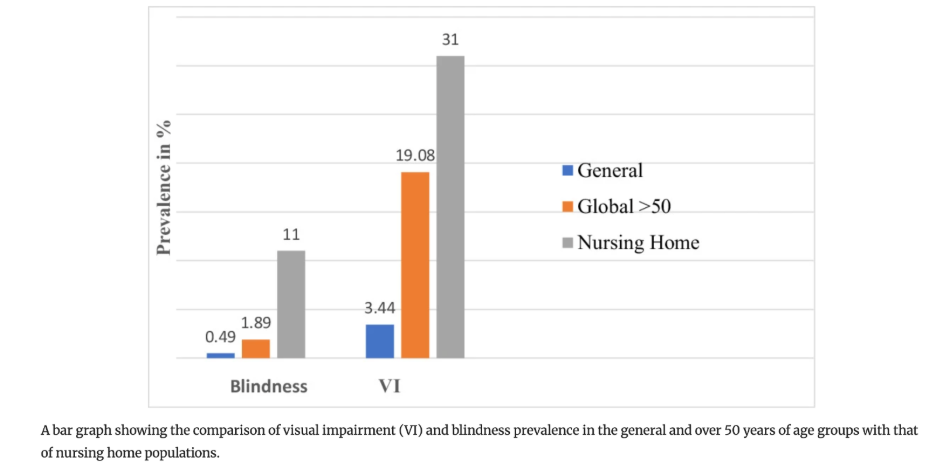
Nearly half of nursing home residents experience visual impairment, with both visual impairment and blindness significantly more prevalent than in the broader population. Meanwhile, Cataracts appear to be the leading preventable cause of vision loss among residents.
This is according to a meta-analysis of several studies published in the Journal of the College of Optometrists, which looked at the global picture and examined 29 published studies involving 7,090 participants to evaluate the prevalence of visual impairment, blindness and common eye diseases among nursing home residents.
The findings suggest that 46.4% of nursing home residents had visual impairment before vision correction, compared with 24.3% after best-corrected vision. Meanwhile, blindness affected 8.7% of residents based on presenting visual acuity, compared with 3.9% after correction.
The substantial differences suggest that some vision loss may be preventable or treatable through appropriate corrective lenses. In fact, most studies included in the review reported significant improvements in visual acuity following refractive correction.
The analysis also identified a high prevalence of eye diseases among nursing home residents. Cataracts were the most common eye condition, affecting 55.6% of residents, followed by refractive errors at 39.8%, age-related macular degeneration at 21.4%, glaucoma at 13.9% and diabetic retinopathy at 7.7%.
Cataracts were the leading preventable cause of vision loss across all regions. Most studies also reported significant improvements in visual acuity following refractive correction, underlining the potential benefits of regular eye care and updated prescriptions and improved access to routine eye care in long-term care facilities.
Factors such as advanced age, frailty, multiple health conditions and cognitive impairment may make it more difficult for residents to access eye care, communicate vision concerns and receive appropriate treatment, the authors conclude.
To address these challenges, researchers recommend expanding eye care services within nursing homes. Suggested interventions include routine comprehensive eye examinations, access to free or subsidized eyeglasses, timely referrals for cataract surgery and nutritional interventions to support eye health.
The researchers also recommend that residents receive a comprehensive eye examination before entering a nursing home, followed by annual examinations or evaluations.