More robust staff training, certifications and standardized clinical practices are major levers clinical leaders are employing to meet continued rising acuity, coupled with increased comorbidities and behavioral challenges.
Specialized clinical programs involving wound care, infection prevention, antipsychotic reduction, behavioral health and IV medications, among others, are being standardized and monitored with dashboards while operators invest heavily in training and root cause analysis to identify areas for improvement.
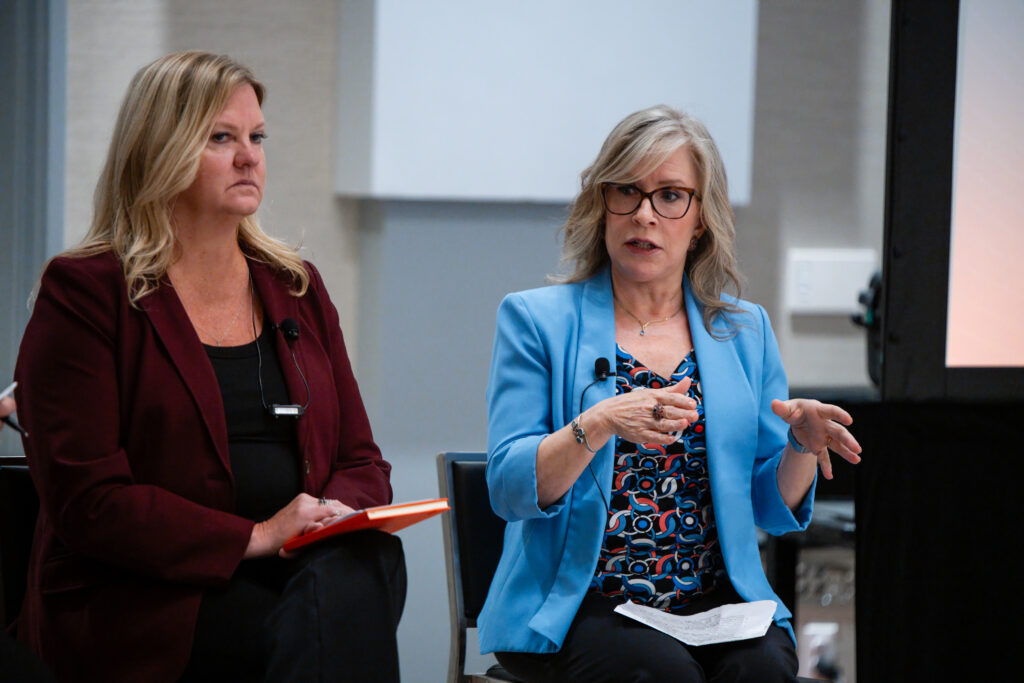
Behavioral challenges complicate a nursing home resident population already faced with multiple comorbidities and more acuity, and operators are exploring behavioral health training and crisis prevention for their staff, said Barbara Revelette, chief nursing officer for Louisville, Kentucky-based operator Signature HealthCARE.
A lot of such training happens upon onboarding, Revelette said, supporting staff in determining when certain behaviors will impact the day-to-day care of residents.
To combat compounding clinical and behavioral challenges, Trilogy Health Services rolls up what happens in a week, whether it’s unplanned hospitalizations, antipsychotic use, infections, abnormal labs or critical lab reports, and the medical director reviews everything and corrects what might have gone wrong.
Then, if a trend is noted between these weekly breakdowns, it’s discussed in a monthly QAPI meeting, said Rhonda Dempsey, SVP and chief nursing officer at Trilogy, which is also based in Louisville.
Meetings catch trends, and QAPI initiatives drill down to root causes
There are breakout projects that come about from these meetings, one being a commitment to making its assisted living properties Joint Commission (JC) accredited. The voluntary evaluation includes on-site surveys, staff and patient interviews.
“With the AL side of things, we always set targets for them as well even though there aren’t five-star ratings by CMS,” said Dempsey. “It really drew a lot of attention to psychotropic usage because they have multiple doctors going out into the community. They want a pill, and the doctor gives them a pill.”
As part of the Quality Assurance and Performance Improvement (QAPI) program, staff worked with the pharmacy to evaluate medication upon admission much like in nursing homes, look at appropriate diagnosis and educate the medical director and doctors involved in AL resident care in order to reduce unnecessary antipsychotics.
Signature’s nurses, meanwhile, are having to administer and monitor more IV medications across facilities – it’s a higher acuity care that takes up more nursing time, said Revelette. And while PDPM rates go up for such services, so do costs.
“You really have to look at what quality you’re providing, ensuring that you have the proper staff because some of these processes are complex that are coming to us,” Revelette said of patient acuity.
Wound care, infection prevention certifications
As for other specialized care, Dempsey said Trilogy has added a wound care certified nurse in every campus and provided training overall as well. Monitoring wound care services through one of its dashboards has helped give leaders and clinical staff an idea of what’s happening divisionally or companywide.
“We have a wound care formulary,” added Dempsey, referring to an approved, evidence-based list of standardized dressings, bandages and topical treatments for wound care. “I think it’s good that you have consistency on great products and consistency that is the same in each campus; that doesn’t mean that you’re using all one product from one vendor.”
Signature sends two nurses from each facility through wound care training certification, funded with $1 million in grant funding.
“It’s a huge investment, and it’s harder to bite off from an individual facility level,” said Revelette. “We should all tap into those grants to be able to pay for that. That’s something that all of our states and CMS really is looking toward.”
The Louisville operator certified 150 new nurses over the last two years in wound certification, Revelette said. And on top of those certifications, Signature has a supplement partner, a wound care company to help with skin sweeps and enter data to explore root cause analysis.
Similar to wound care, best infection prevention practices hinge on formularies and standardizing who will become infection control preventionists across the company, Revelette said.
Enhanced onboarding training helps here too, Revelette said, ensuring everyone is doing their proper surveillances from the beginning. “Return demonstrations” are used for infection prevention training, where more tactile lessons are taught, demonstrated, and then the learner performs the task independently while the teacher observes.
At Trilogy, a monitoring program tracks infections and if the percentage target is off, then there’s a focused review to see why a facility isn’t meeting infection prevention goals.
“If you’re acquiring and spreading internally, we do a drill down. We set targets company wide, and then monitor what is happening,” said Dempsey, discussing infection prevention within the context of M&A.
Companies featured in this article: