

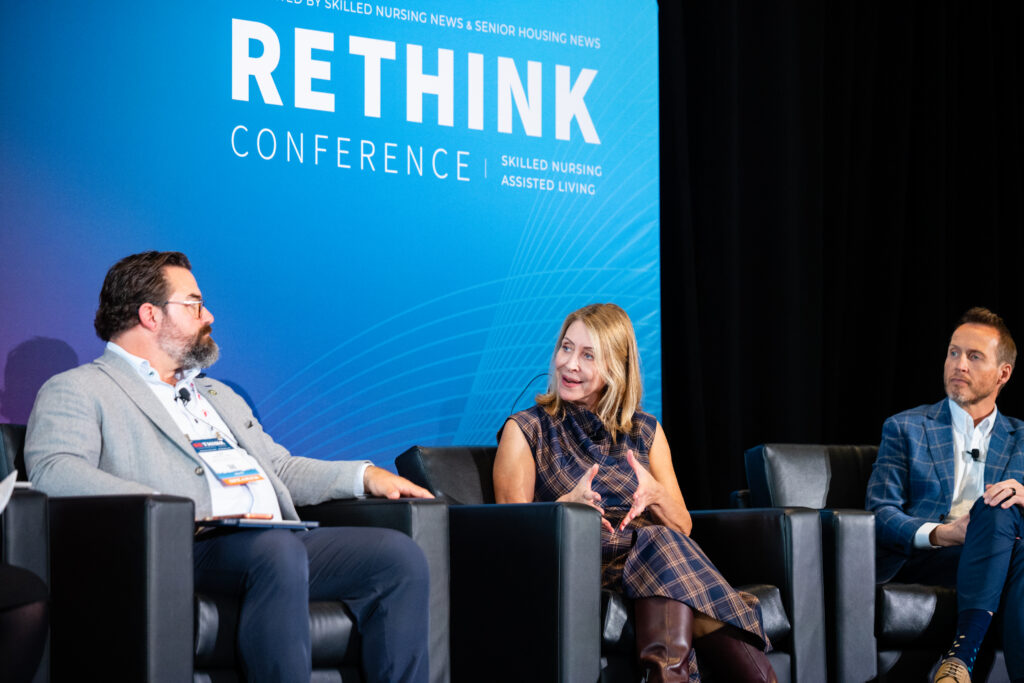
Nursing home operators are building their own internal AI systems in addition to partnering with vendors and integrating tech to assist with not only clinical needs but financial decisions, including how exactly to grow their footprints.
Internally built basic learning models and other systems are being tailored to meet the needs of staff on the floor, allowing leaders to fine tune how care is provided across buildings while also keeping the mission of the operator in mind. In addition, internally developed AI tools are helping leaders ease M&A decisions, including by giving a quick snapshot of state reimbursements during acquisitions.
For CarDon & Associates, the group is investing heavily in AI to develop internal solutions to the sector’s challenges and looking at potential partnerships, with a referral intake platform in the works, said Tom McClelland, chief technology officer for CarDon.
“We’re expanding that … further into admissions as we look at MDS and some of the processes there. We have vendors here trying to sell that. All of the vendors want to sell us MDS solutions and referral solutions, but I would say that nowadays it’s not that hard to do [internally],” McClelland told Skilled Nursing News.
But operators can’t be flippant about AI deployment either, McClelland said. Measured and thoughtful is the way to go, and careful reviews of any agreements in place with vendors, if any.
“We have a stake in the game more than anybody else. How do we use these tools to be effective? We should not just wait for someone else to tell us how to solve our problems. We can go do that ourselves,” said McClelland. “We can find the right partners that are able to do that and think differently.”
Cascadia Healthcare has gone the internal route too, with a platform to help staff address clinical and psychosocial needs.
Internal AI for M&A, clinical needs
Another internally developed AI solution allows Cascadia’s leaders to look at the size of state reimbursements, helping them decide where to expand.
The Idaho-based operator does its own underwriting and can make decisions on acquisitions in an hour or so using its own internal tech platforms, Cascadia President and CEO Owen Hammond told SNN.
“There’s an efficiency to it. We look at it as an interaction with a strategist. It helps us connect things that would never be connected before. That has been really eye opening for us,” said Hammond.
A lot of vendors have “bolt-ons” that may not be necessary from an operator perspective; it boils down just a good dashboard and a lot of information, he said.
In the end, it’s a “low-margin game,” Hammond said, and AI wins get rid of all the menial tasks so nurses can get back on the floor where they want to be. In the long term, internal AI systems must be built to withstand market headwinds and must also be systems floor staff is excited to use.
Cascadia’s basic learning models were built to learn the nursing home business, how care is provided and the operator’s mission before even considering implementation.
“Is it helpful for them? Do they see it as something that’s going to be restrictive to them, or something that’s going to ‘big brother’ them? [AI is] there to give them information; nothing is going to take away from their ability to make the decision. We’re never going to do that,” said Hammond.
Internal AI tools can be tailored to the needs of the clinicians, Hammond said. A director of nursing can create a tool exactly the way they want it designed to help with their workflows, and it’s usually a surprise to leaders, who would have approached such a tool differently, coming from a different perspective and role in the company.
Taking the plunge amid polarizing views
FellowshipLIFE is somewhere in the middle when it comes to embracing AI, Chief Marketing and Innovation Officer Liz Fandel said, but it’s hard to ignore when most platforms or services already have some element of AI baked in. AI tools for resident engagement are a game changer, and this service is advancing quickly, but Fandel says she’s still conflicted and wanting to take a responsible approach to AI tools, internal or otherwise.
AI is having a polarizing effect in the sector, added Hammond, with a lot of people excited and looking for innovations, while others think of AI as more of a fad and are pumping the brakes on integration. But one thing is for sure – tech is moving so fast that it will be incredibly hard to catch up, if an operator is taking more of a wait and see approach
Internal AI use among HCBS companies can get complicated since aides are engaging in the community instead of using AI in an institutional setting. In some cases, Medicare is sending medical aides for skilled nursing visits in the home and AI is used when these nurses are stretched thin, but it’s unclear if these tools can be used for HCBS beneficiaries with less acute issues.
Either way, AI tools are exactly that – a tool. It’s up to operators to build internal AI platforms to be as exacting or all-encompassing as they’d like it to be. And figure out if an existing tool, like what’s used for SNF-at-home visits, makes sense to incorporate in other care settings that may be a step down in acuity.
“We can all go buy a DeWalt saw, right? We can put it in our garage, and some of us can figure out how to cut some things, and maybe we can build a makeshift box that we call a cabinet,” said McClelland. “Likely none of us are going to build a house with that tool … that’s how AI is. You can go the extreme where you’re writing your own software every day, but then there’s going to be other folks that are using it to just help them do very simple things. There’s a huge continuum there, and I think we need to be cognizant of that.”
Companies featured in this article:

