The total number of nursing homes fell by 6% between 2015 and 2025, from 15,643 to 14,742, with half of that decline occurring in rural areas.
That’s according to an analysis published in KFF Health News, which also took a closer look at the rural nursing home financial landscape, noting that the 2025 federal reconciliation law is projected to significantly reduce Medicaid spending by $911 billion over 10 years, including an estimated $137 billion reduction in rural areas.
Medicaid is the primary payer in nursing homes across the country, and although the law includes $50 billion for a new rural health transformation program, it’s not enough to fully offset expected cuts, KFF found.
Meanwhile, there are few state proposals that focus on rural nursing homes, the analysis noted.
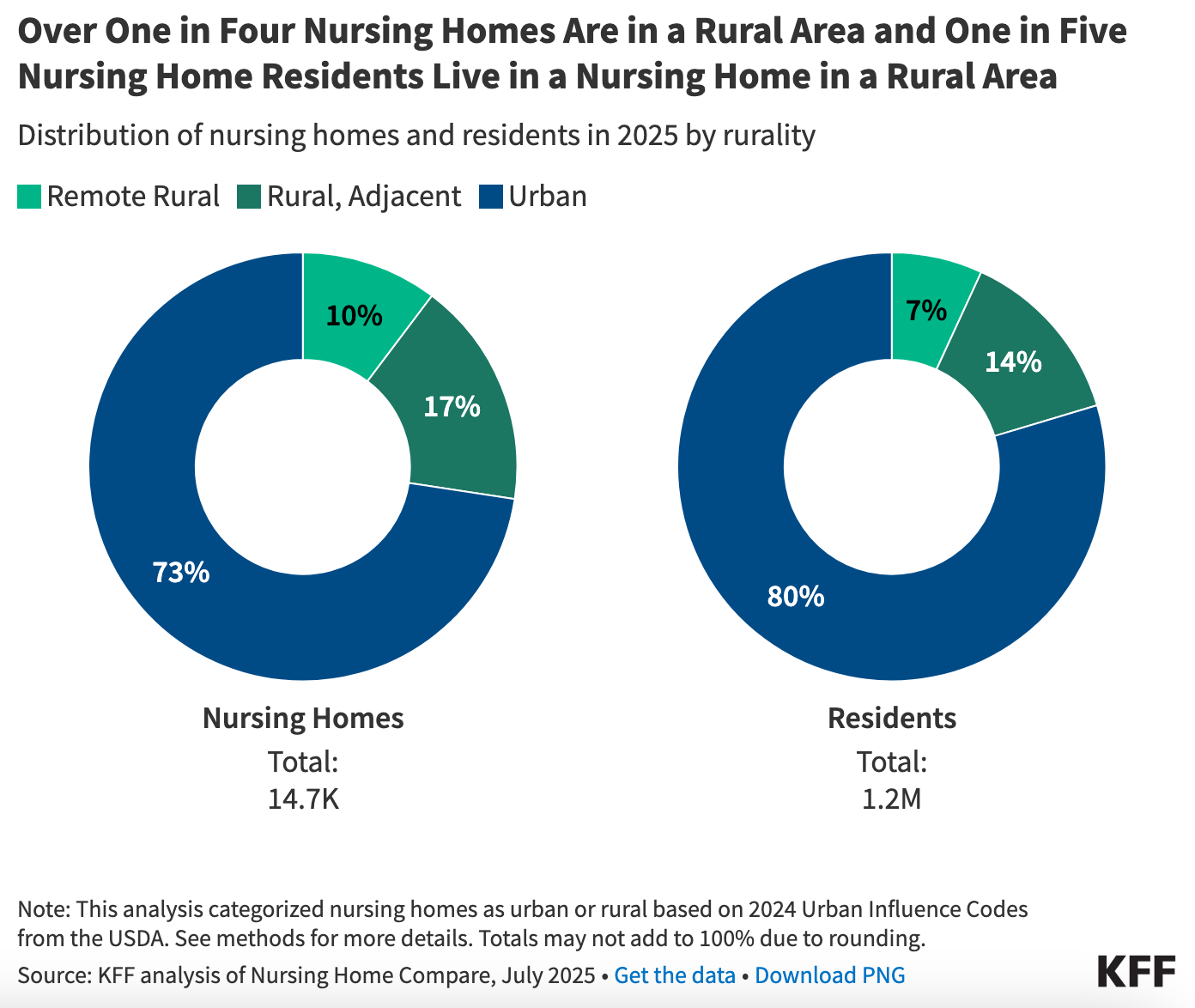
As of July, about 1.2 million people are living in nursing homes, and one in five of this group are in rural facilities, KFF found. Rural nursing homes make up more than one-quarter, or 27%, of all facilities and there are about 4,000 rural nursing homes serving more than 250,000 residents.
And rural communities generally have older populations and higher rates of disability, meaning the demand for nursing homes in rural areas is higher in these regions. Some states including Vermont, Wyoming and South Dakota have especially high shares of residents in nursing homes.
KFF also found that the number of rural nursing home residents declined by19% in remote rural areas, compared to 12% in other rural areas. In urban areas, the drop in residents was 8%.
Remote rural facilities experienced the steepest drop, and resident populations declined even faster than facility counts – this could reflect a broader shift toward home- and community-based services, KFF said.
And while rural nursing homes face unique challenges including declining numbers and funding pressures, their care characteristics closely resemble those in urban areas.
A comparable share of residents rely on Medicaid and there are similar staffing levels between urban and rural areas. There was also a similar rate of serious care deficiencies that resulted in harm or immediate risk to residents.
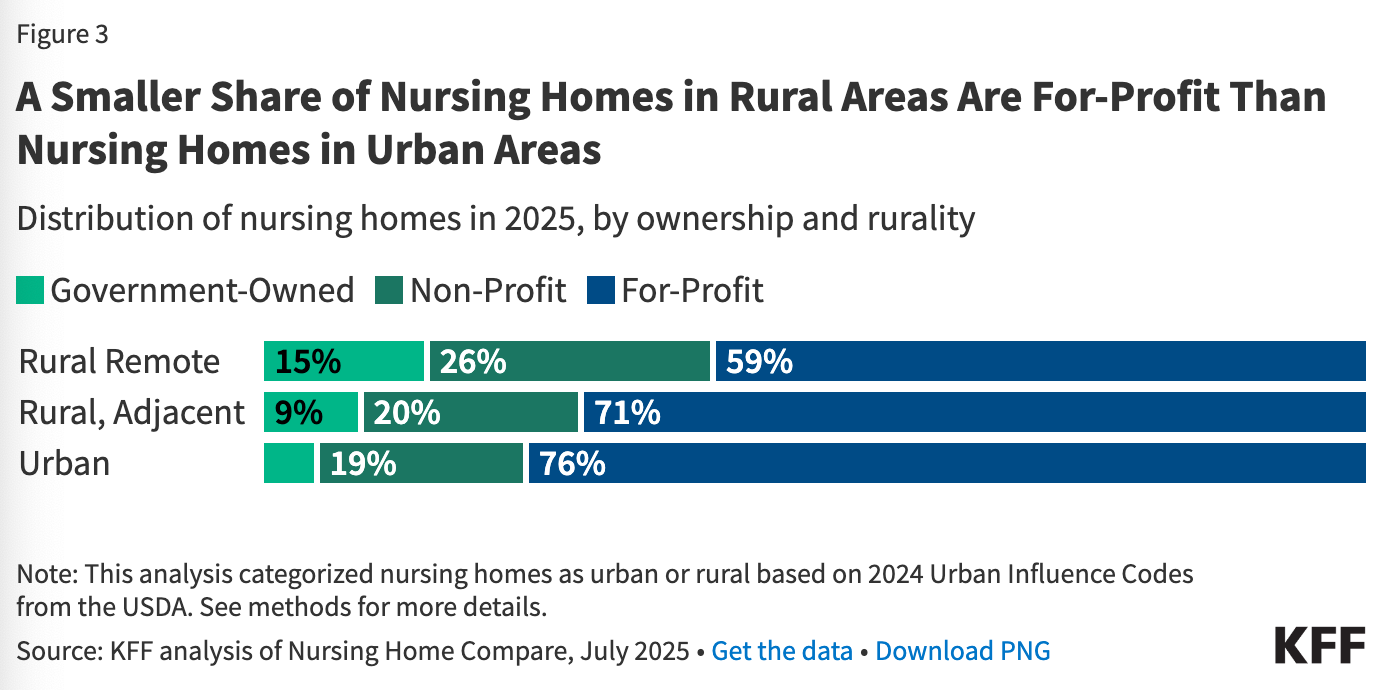
When it comes to ownership, rural nursing homes are more likely to be nonprofit or government-owned properties rather than owned by for-profit entities, which in turn tend to operate in urban areas.
About 59% of remote rural nursing homes have for-profit ownership, while 76% of urban ownership is for-profit.
Companies featured in this article: