



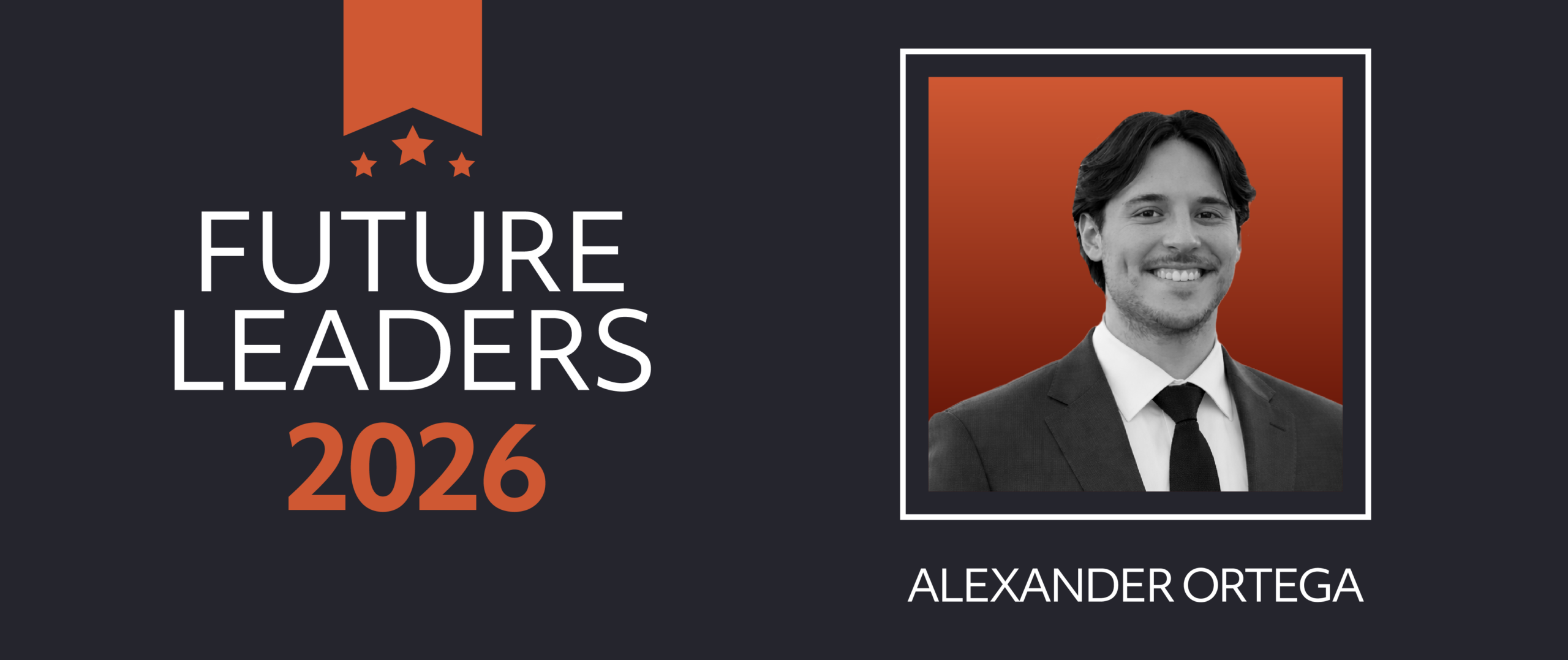


Alexander Ortega, General Manager and Administrator at Ignite Medical Resorts, has been named to the Future Leaders Awards Class of 2026 by Skilled Nursing News.
To become a Future Leader, an individual is nominated by their peers. The candidate must be a high-performing employee who is 40 years of age or younger, a passionate worker who knows how to put vision into action, and an advocate for older adults and the committed professionals who ensure their well-being.
Ortega sat down with Skilled Nursing News to share what drew him to the skilled nursing industry, the biggest leadership lessons he has learned, his thoughts on the future of skilled nursing, and much more. To learn more about the Future Leaders Awards program, visit https://futureleaders.wtwhmedia.com/.
SNN: What drew you to the skilled nursing industry?
Ortega: My introduction to senior care came during my senior year of high school through a program called “Adopt a Grandparent.” As part of a school club, we visited a local nursing home once a month, and I quickly found myself drawn to the environment and the residents we met. Those experiences inspired me to become a certified nursing assistant (CNA) that summer.
What stood out most was the opportunity to connect with people from different backgrounds and walks of life. Every resident had a unique story, a lifetime of experiences, and lessons to share. Building those relationships left a lasting impression on me and reinforced the importance of serving others.
Once I entered the skilled nursing and long-term care setting, I knew I had found my calling. The ability to make a meaningful difference in residents’ lives while supporting their families and care teams gave me a sense of purpose that has stayed with me throughout my career. From that point on, I knew this was an industry I wanted to dedicate my life to.
SNN: How would you describe your leadership style, and how has it changed over time?
Ortega: I would describe my leadership style as leading by example. Becoming a licensed nursing home administrator at 23 came with a unique set of challenges. I often heard questions like, “Wait, you’re the administrator?” or “How did you get a position like this at your age?” Early in my career, I quickly realized that earning trust and respect couldn’t come from a title alone. It had to be built through actions.
From the beginning, I made a commitment to never ask a team member to do something I wasn’t willing to do myself. Whether that meant helping on the floor during a difficult shift, supporting a department through a staffing challenge, or jumping in wherever needed, I wanted my team to know that I was willing to work alongside them.
Over time, my leadership philosophy evolved beyond my own actions. Today, I encourage all leaders in the organization to embrace the same mindset. I believe the strongest leadership teams are visible, engaged, and present. It’s not uncommon to see our department leaders working side-by-side with their teams. When leaders are willing to roll up their sleeves and share in the work, it builds credibility, strengthens culture, and creates a greater sense of teamwork throughout the organization.
SNN: What is the biggest leadership lesson you’ve learned while serving the skilled nursing industry?
Ortega: The biggest lesson I’ve learned is that leadership isn’t black and white. There isn’t a single leadership style that works for every situation because every team, employee, and resident is different. What motivates one person may not resonate with another.
Over time, I’ve come to believe that one of the most important qualities of an effective leader is adaptability. The ability to assess a situation, understand the people involved, and adjust your approach accordingly is critical. It’s a skill I’ve continued to develop throughout my career, and one I still work on every day.
The best leaders aren’t rigid in how they lead. They’re flexible enough to meet people where they are while keeping everyone focused on a common goal.
SNN: In one word, how would you describe the skilled nursing industry and why?
Ortega: Relentless. If I had to describe the skilled nursing industry in one word, that would be it.
This is a profession that never stops. Residents and families depend on us 24 hours a day, seven days a week. Regulations continue to evolve, staffing challenges require constant attention, and every day brings a new problem to solve. No two days are ever the same.
What makes the work so meaningful is that we are caring for people during some of the most vulnerable moments of their lives. Residents and their families place an enormous amount of trust in us, and with that comes a tremendous responsibility. Despite the challenges, our goal is always the same: to provide exceptional care and create an experience that leaves a lasting, positive impression.
It’s demanding work, but knowing that you can make a real difference in someone’s life is what makes it so rewarding.
SNN: What do you see as the biggest opportunities and challenges currently facing the skilled nursing industry?
Ortega: I believe the greatest opportunity in skilled nursing is redefining our role within the healthcare continuum. As patient acuity continues to increase and the industry shifts toward value-based care, skilled nursing providers have an opportunity to demonstrate that we can deliver exceptional clinical outcomes while remaining one of the most cost-effective settings for post-acute care.
At the same time, our greatest challenge remains building and retaining a workforce that is engaged, well-trained, and supported. The quality of care we provide is directly tied to the strength of our teams, making workforce development one of the most important issues facing the industry today.
That’s why, at Ignite Medical Resorts, we place a strong emphasis on investing in our people and fostering a culture where employees feel valued, empowered, and connected to our mission. When we create an environment where team members can grow and thrive, we’re ultimately able to provide a better experience for our residents and their families.
SNN: If you had a crystal ball, what do you think will impact the skilled nursing industry over the next 5-10 years?
Ortega: I believe the future of skilled nursing will be shaped by our ability to adapt and innovate. Patient acuity will continue to increase, value-based care will become the standard, technology and AI will transform operations, and consumer expectations will continue to rise.
Ultimately, I believe the industry’s future belongs to organizations that can successfully balance exceptional clinical care with operational excellence. Regulations, reimbursement models, and technology will continue to evolve, but the facilities that thrive will be those that remain committed to quality outcomes while embracing change.
Just as importantly, successful organizations will continue investing in their people. Technology can enhance care delivery and improve efficiency, but great outcomes will always be driven by engaged, well-trained teams.
I’ve never viewed change as a threat. Instead, I see it as an opportunity to elevate what skilled nursing can be and to continue demonstrating the vital role our profession plays across the healthcare continuum.
SNN: In your opinion, what qualities must all Future Leaders possess?
Ortega: I believe Future Leaders must possess five essential qualities: adaptability, integrity, emotional intelligence, accountability, and vision. The healthcare landscape is evolving rapidly, and leaders must be able to navigate change while staying grounded in their values.
One of the most important lessons I’ve learned is that people don’t expect leaders to have all the answers. What they do expect is honesty, clear communication, and the willingness to make difficult decisions when necessary. They want leaders who are accountable, who listen, and who genuinely care about both the patients they serve and the people providing that care.
Looking ahead, I believe the most successful leaders will be those who can balance operational excellence with human connection. They will inspire trust, empower their teams, and create a shared vision that others want to be a part of. Those qualities, more than anything else, will define the next generation of leaders in skilled nursing and healthcare.
