

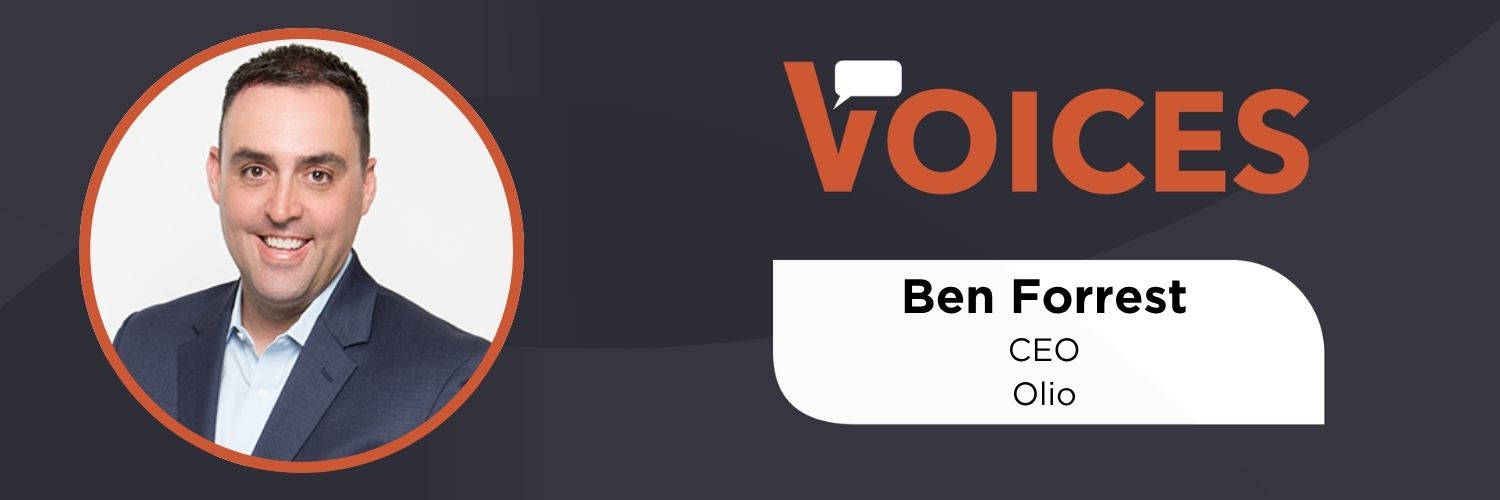


This article is sponsored by Olio. Transitions of care are one of the most important and most fragile points in the post-acute journey. For skilled nursing operators, getting handoffs right now requires more than better communication — it takes stronger accountability, real-time collaboration between clinical partners, and a more durable operating model. In this Voices interview, Ben Forrest, CEO of Olio, talks about where broken handoffs really come from, why the industry is being pushed to operate differently, and what he thinks will separate the organizations that build stronger transitions from those that continue to fall behind.
Skilled Nursing News: What core experience or perspective has most shaped the way you think about post-acute care and care transitions today?
Ben Forrest: A lot of it comes from being close to nearly every part of the care experience over the course of Olio’s history. We’ve worked with payers, skilled nursing operators, provider groups and care teams who are all trying to do right by the same patient, but often without a shared way to communicate, coordinate or see what’s happening after a transition occurs.
That’s shaped how I think about post-acute care more than anything else. Skilled nursing operators sit at the center of so many of those transitions, and they’re managing more complexity with fewer resources than ever. A change in condition or a missed follow-up can affect both the patient’s outcome and the operator’s business.
SNF operators don’t need another place to document work after the fact. They need a way to stay connected to the people responsible for the patient after the handoff, see what’s happening in real time, and act before small gaps become bigger problems. That’s the work we’ve been focused on, and we want to set the bar for care coordination excellence moving forward.
We’re excited to be introducing new solutions that we believe can improve patient outcomes while serving our customers in a more effective way.
You recently organized a Transitions of Care Summit with key SNF leaders. What was the overall sentiment in the room, and what was the biggest takeaway for the skilled nursing industry?
The biggest takeaway for me was that the phrase “transitions of care” is still not part of the everyday language many skilled nursing operators use, even though everyone in the room agreed it needs to be and increasingly will be. That really stuck with me. I was driving back from Chicago to Indianapolis after the summit and kept thinking about it. I was surprised to hear people say, “Yes, I understand what it means, but no, it is not part of how I think every day.” That was more revealing than I expected.
To me, that says the industry is still in the middle of an important shift. Transitions of care are already a critical part of how skilled nursing providers are judged and how outcomes are shaped, but the language and mindset haven’t fully caught up yet. That gap may be the biggest opportunity and the biggest challenge ahead.
The opportunity is real: operators who build transitions of care into how they staff, measure and make decisions every day will pull away from the pack in referral relationships, reimbursement and reputation. The challenge is that getting there takes more than awareness — it means changing how teams actually operate day-to-day.
What do you think is the biggest gap between how the industry talks about transitions of care and how it actually operates day-to-day?
Transitions of care are a major weak point in the care continuum — not because providers don’t care or don’t want to get it right, but because the volume, complexity and acuity of the patients moving through that link demand a higher level of function, process and coordination than the system has historically supported.
Skilled nursing sits at the center of a very complicated patient journey for some of the highest-acuity patients in U.S. health care — older, sicker patients coming out of the hospital, often into short-stay rehab, to get back home where they and their families want them to be. Because critical information is scattered across clinical teams during a handoff, the transition into and out of the SNF is a delicate balance of competing priorities: managing patient acuity and readmission risk, moving quickly enough to compete for the admission, and building the long-term data and reputation that come from doing it well. That’s what makes the transition so important, and so hard to get consistently right.
We heard this again and again at our Transitions of Care Summit: operators feel like they’re doing their part but only seeing their own piece of the journey. The right data doesn’t always get to the right people at the right time, and services aren’t always aligned to the same incentives — which is a big part of why reimbursement and risk models are starting to shift the way they are.
That’s part of why the industry still underestimates how much process has to exist around these handoffs for them to succeed. That may be a little taboo to say, because most operators will tell you transitions matter — but on a day-to-day basis, they’re often not treated as the most urgent operational problem in the building.
But getting handoffs right has lasting value. When skilled nursing providers improve transitions of care, the impact extends far beyond that one moment. It affects partners, payers, downstream providers and, most importantly, patient outcomes. Facilities that get this right see it show up in concrete ways — fewer avoidable readmissions, stronger CMS Star Ratings, more predictable census and staffing, and hospital partners who trust them with more referrals because they can prove how well those transitions go. That track record is what turns a good handoff into a durable competitive advantage.
There has been growing pressure on SNFs to operate more like hospitals, with tighter programs, dedicated teams and clearer accountability structures. Do you think that is the right model for post-acute care, and why?
I do think that is the direction skilled nursing is moving, and in many ways, it is the right one. Hospitals became much more focused on transitions of care when the economics pushed them there. Once reimbursement and risk models changed, they had to start thinking more seriously about what happened to patients beyond their own four walls.
Skilled nursing is now facing a similar reality. The more progressive operators understand that the economics will keep evolving, referral patterns will keep shifting and payer networks will continue narrowing around the providers that can deliver the right care at the right cost while supporting a strong patient experience.
That is why clearer accountability and more intentional transition processes matter. There is a real opportunity for SNFs to improve how patients move into and out of the facility, and that has a broader impact on the organization’s overall profile. An intentional transitions of care program improves relationships with hospitals, payers and downstream providers, and it shapes how the market views the quality and reliability of the care being delivered.
Payers and hospital partners are increasingly holding SNFs accountable for outcomes well beyond discharge, including 30 and 60 days out. How prepared do you think the average SNF operator is for that shift, and what does getting ahead of it actually look like operationally?
I think operators are aware of the shift. I do not know that most are fundamentally ready for it or have a clear plan for how to respond.
One of the simplest ways to see that is to ask a multi-site operator: how many discharge-to-home-health or hospice transition processes do you have? If they have 38 buildings, the answer is often 38 different processes. That tells you right away there is not enough standardization around something that is becoming increasingly important.
Getting ahead of this means having a much more defined approach to how patients transition to home health and hospice and then having the data to show how those transitions were executed at the patient level. It also means tracking how those downstream providers actually perform and having measurable conversations with them, much like hospitals are now doing with SNFs and payers are doing with providers across the continuum.
When you have that kind of coordination and transparency, you put yourself in a much better position to improve outcomes. You can discharge to the right providers, adjust staffing and discharge planning based on what the data is actually telling you, and use that same data to show where performance is strong and where it needs to improve. That is what operational readiness really looks like.
What separates the skilled nursing operators that will thrive over the next five years from those that won’t?
One of the biggest separators will be how much control an operator has over their transitions of care for the patients coming into and out of their facility. Getting transitions of care right, full stop, is a significant competitive advantage.
Real-time visibility is what changes the equation with these transitions. When you can see the whole journey instead of reacting to whatever comes through the door, you staff more appropriately, manage census more effectively and cut operational waste. The same is true downstream — as you coordinate care with home health and hospice, the strongest operators are the ones actively managing those network relationships and using data to see where transitions are working and where they’re not.
That visibility is what gives you tighter control over transitions — not just reacting to volume but operating with intention. There’s a level of organizational sophistication that comes from being genuinely invested in transitions of care: it shows up in how efficiently the building runs, how well partners perform, and how consistently patients move through the continuum. Over the next five years, I think that combination — visibility, control and the discipline to act on both — will be the major competitive advantage for skilled nursing operators.
What should SNFs look for in technology partners as they navigate the growing complexities of care transitions?
The market is crowded with solutions focused only on the front end of the process, especially pre-admission. But transitions of care are much bigger than pre-admission alone, and the value of the right technology partner should be much broader as well.
When I think about what providers should look for, it starts with whether a platform can support the full transitions of care journey as one connected system, not a collection of point solutions stitched together. That means AI-powered tools at pre-admission to help identify flags and support better decisions about whether a patient is the right fit. It means real-time visibility into census once that patient is in the building — who’s there, where they are in their journey and what needs attention. And it means that same platform carries that picture through to the back end. That includes coordinating referrals, managing discharge and maintaining visibility into the patient after they leave the facility. To me, that is what a true transitions-of-care process looks like, from pre-admission through case management and post-discharge coordination.
So, the real question is whether a technology partner can help a skilled nursing provider manage that entire process in a connected way, not just solve one isolated piece of it.
How do you see the role of technology changing as the needs around transitions of care evolve?
I think the biggest shift is that technology has to fit into existing workflows instead of creating new ones. What I mean is that the role of technology should be to add value, not just add another system or another layer of work.
That is the lens we look through in everything we build. How do you create a transitions-of-care product that supports the process without adding extra steps for the user? At the end of the day, the goal is to improve the patient journey and patient outcomes—not create more labor for the people trying to manage care. That is where I think technology has the greatest opportunity.
The best solutions will help providers navigate a more effective transition process and a better patient journey without introducing more friction, more handoffs or more systems along the way.
Zooming out, what do you think needs to change at the leadership or operating-model level for skilled nursing providers to build more durable, effective transitions of care?
Most skilled nursing operators are understandably focused on census — getting the right patients in the building and maximizing traditional Medicare opportunity. That’s always going to matter, but it doesn’t have to be an isolated priority. Increasing your sophistication around transitions of care doesn’t compete with your census strategy. It strengthens it.
The market still doesn’t fully appreciate that one of the best ways to strengthen referrals and attract the right patients is to show referral sources how effectively you transition patients out. If you can demonstrate that you have the processes, data and network relationships in place to move patients to a lower-cost setting appropriately and successfully, that becomes a differentiator.
The operators that build durable, effective transition models will be the ones that create more confidence with hospital partners, improve their reputation in the market and ultimately put themselves in a better position to attract the kinds of patients they want most.
Editor’s note: This interview has been edited for length and clarity.
Olio is the first platform to modernize the entire transitions of care journey, giving SNFs control over their admissions, their census, and their referral coordination to improve their bottom line and drive growth. Learn more at https://www.olio.health/for-skilled-nursing-facilities.
The Voices Series is a sponsored content program featuring leading executives discussing trends, topics and more shaping their industry in a question-and-answer format. For more information on Voices, please contact [email protected].
