Nursing homes are increasingly leveraging artificial intelligence (AI) to streamline referral processing and case management, with the ability to reduce hospital packets to concise summaries in under a minute and cutting referral review times in half.
Payer-provider relationships are expected to evolve as a result, with tech-supported documentation and care planning inspiring payer trust in operators – even as both sides contend with adopting alternative value-based reimbursement models, said Mark Lilly, president of MNS.
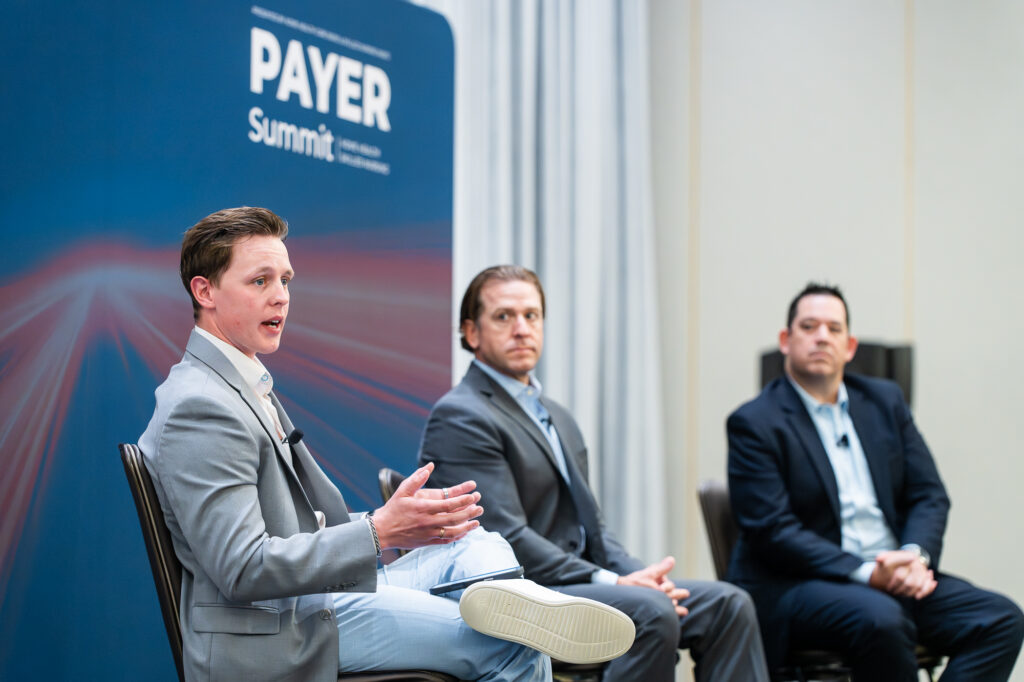
Lilly discussed how AI is reshaping managed care administration in the sector at Skilled Nursing News’ Payer Summit in June, alongside Justin Meara, senior vice president of managed care for Ignite Medical Resorts. They spoke on a panel sponsored by exacare ai and moderated by Ein Findley, the company’s director of sales.
The administrative burden of gathering and reviewing large medical record packets is a huge part of the prior authorization process and, in turn, managed care administration. It can be quite cumbersome, often requiring the review of between 150 to 300 pages.
“You’re spending a lot of time going through all of these packets and then getting them to the health plan and just waiting for the turnaround time from the health plan,” said Meara. “Sometimes you’re talking 72 hours before you get a turnaround time, and then you have the hospitals breathing down your neck trying to get the patient out; they need to open up that bed.”
Staff are tasked with manually locating required documents like medical history and physicals, therapy evaluations, medication lists and clinical notes before sending everything along to an insurance plan.
And prior authorization isn’t going away, Lilly said. It’s one of the health plan’s levers to control utilization and expense. The Centers for Medicare and Medicaid Services (CMS) is looking to put all beneficiaries into some sort of risk-bearing entity, and so prior authorizations will continue to be a tool for MAOs.
“[MAOs] are hired by the government to control expenses and get more value or better outcomes out of the system for less cost or maximizing the cost. That’s what they’re there for,” said Lilly.
But there’s still a lot of bad press surrounding prior authorizations, Lilly said, and the pressure is on to “loosen” prior authorization criteria. Timing is ripe for innovative processes and workflows to be adopted by nursing home operators, which will make prior authorization less of a barrier to patient care.
Referral processing and care level needs
For Ignite, AI investment has helped the provider break down hospital packets in less than a minute, Meara said, making a tremendous dent in the time it takes to process a referral. While time management can be measured, Ignite has only been using the AI case management software for a few months. And so, data for time and financial savings to Ignite are still in the process of being estimated.
But AI tools have made one difference that can be easily gauged: Hospital packets can be slimmed down to about 30 pages using the exacare ai platform, Meara added, providing an executive summary of sorts with all the most important pieces all together on the page.
Admissions and business development were already using exacare ai when case managers were introduced to the new system, he said. It helped the case managers learn gradually rather than being thrown onto an unfamiliar platform.
If something is missing from a patient’s packet, the Ignite team knows in seconds and can ask the hospital for what they need. Ignite’s case management team has reduced the time it takes to review documents for a referral and send along to the health plan from 25 minutes to 10 minutes, Meara said.
Meara noted an easier workflow for coverage after admission too. In one instance, this was tied to a significant increase in level three requests. Such requests are typically sent to the health plan if a patient needs 4-plus hours of daily skilled nursing and 3-plus hours of daily therapy, 5 days a week.
“According to their algorithm, we’ve exceeded that amount of requests … I will say that about 80% of those requests have been approved,” said Meara.
Lilly expects better alignment between a patient’s needs, the level of care authorized and the reimbursement providers receive because of improved referral processes and tech-supported documentation.
In turn, payer-provider relationships will evolve through contract amendments, even as value-based reimbursement models become more prevalent. Nursing home operators with sophisticated use of data and care planning can be trusted with alternative payment models, Lilly said.
Centralized case management using AI
Ignite was able to transition to a centralized intake model with the changes in case management workflow, with a team focused on benefits eligibility and authorization activities. Another team manages concurrent reviews, timely communication with health plans and documentation required for filing, Meara said.
Work assignments are coordinated through a shared dashboard so case managers can assign cases to themselves, Meara said of the new workflow. Prior to AI implementation, case managers were responsible for patients from admission through discharge across facilities.
Lilly said such changes are essential when the sector continues to see fragmentation between payers and providers – health plans have different prior authorization portals, different processes and varied reviews based on the patient’s insurer and payer.
Centralized systems like the one at Ignite help avoid errors that cost money later in the form of audits, and those early days are flagged for reimbursement when in the past they might have been missed in that gray period between referral and admission.
“Adding speed and accuracy is what some of these innovations and solutions can help provide,” said Lilly.
Companies featured in this article:
Centers for Medicare & Medicaid Services, CMS, ExaCare AI, Ignite Medical Resorts