

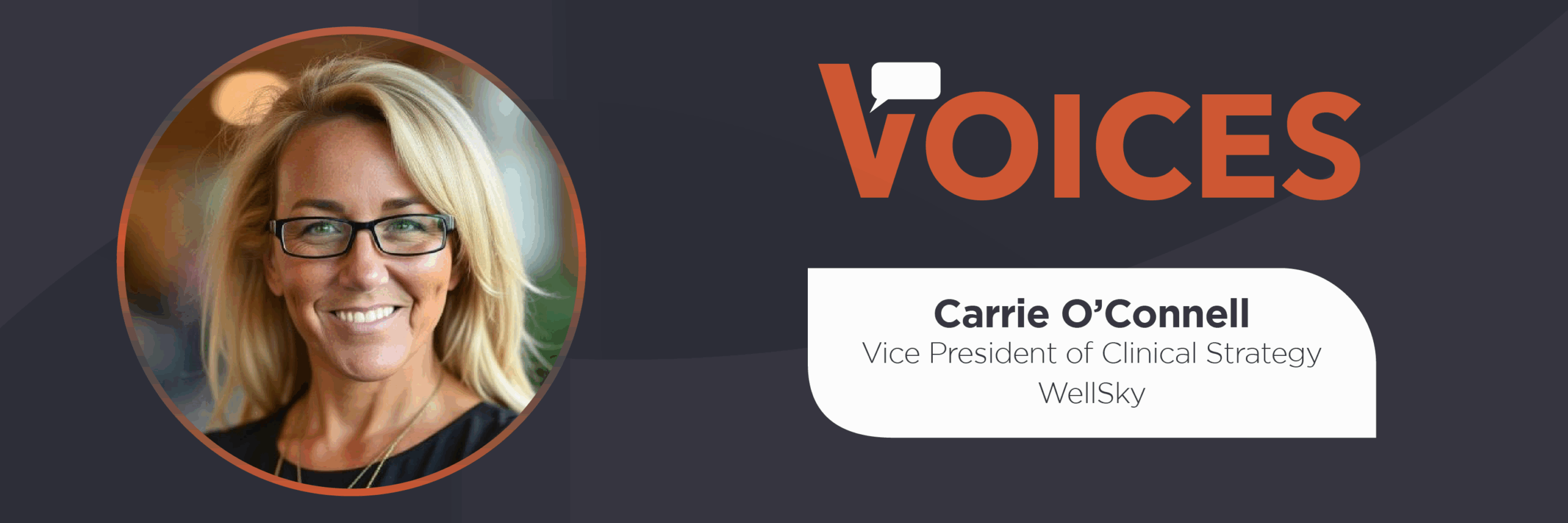


This article is sponsored by WellSky. As long-term care providers face tighter staffing, heavier documentation loads, and rising resident acuity, the need for smarter clinical workflows is only growing. WellSky is leading the shift toward AI-powered tools that reduce administrative friction and return time back to the bedside. In this Voices interview, Carrie O’Connell, Vice President of Clinical Strategy at WellSky, shares how her roots as a night-shift nurse shaped her leadership lens, and how technology can better support clinicians without replacing the human connection that defines great care.
Skilled Nursing News: You began your career as a nurse working the night shift in a skilled nursing facility and have since become a national leader in clinical strategy and health care technology. How have your experiences at the bedside and in executive roles shaped your perspective on long-term care?
Carrie O’Connell: Starting my career as a night shift nurse in a skilled nursing facility shaped everything I believe about long-term care — and, honestly, that’s why I chose nursing in the first place. I was drawn to nursing because it sits at the intersection of science and humanity. I wanted a profession where critical thinking mattered, but where presence, trust, and compassion were just as essential. Long-term care, in particular, appealed to me because it values continuity and relationships. You don’t just treat conditions — you care for people over time, hear their stories, and become a steady presence in their lives.
Working nights teaches you quickly what matters. You learn to recognize subtle clinical changes – who is anxious versus who is truly declining – and you develop sound judgment in the quiet moments, when there’s no immediate backup and no margin for distraction. For me, those shifts reinforced that long-term care isn’t simply about managing chronic conditions; it’s about preserving dignity, fostering trust, and supporting quality of life day after day.
As I moved into leadership positions and eventually into the clinical strategy and health care technology sector, I carried those bedside lessons with me. I’ve always believed that technology should protect and elevate clinical judgment — not replace it. In my role at WellSky, I have the privilege of working on what mattered most to me as a nurse: reducing documentation burdens, improving visibility, and enabling care teams to spend more meaningful time with residents. Every strategic decision I make is still grounded in that night-shift perspective — asking if what we’re building truly supports the people health care depends on, shift after shift.
What are the biggest workflow challenges clinicians face in skilled nursing today?
The biggest challenge isn’t a lack of skill or compassion — it’s cognitive overload. Clinicians are juggling residents with complex needs, regulatory requirements, staffing shortages, and an overwhelming amount of documentation tasks. Too much of their time is spent clicking, checking boxes, and reconciling information that already exists somewhere else.
This constant administrative work pulls clinicians away from the bedside and prevents them from doing the tasks that actually define what good nursing is. It leads to after-hours charting, fatigue, and burnout. Nurses didn’t enter this profession to document care — they entered it to provide care — and we need to honor that.
How does WellSky address these challenges?
At WellSky, our approach is very intentional. We focus on removing friction from clinical workflows so clinicians can practice at their best.
When a patient leaves the hospital or emergency department, the care they receive post-discharge is critical to the resident’s successful recovery and to help prevent future readmissions. That means the referral process is where the patient’s journey truly begins. With the WellSky CarePort Referral Intake solution, clinicians have access to referral documents before the resident arrives, and they can use artificial intelligence (AI) to quickly analyze and summarize information from multiple sources. This streamlines intake, speeds up referral reviews, and helps clinicians focus more on their residents from the very beginning by reducing administrative delays and supporting a smoother transition into care.
Once the referral is complete, the WellSky Long-Term Care EHR powered by WellSky SkySense AITM continues to remove friction from clinical practice. WellSky SkySense AI is a suite of tools designed to help remove barriers so caregivers can focus on what they do best. It assists clinicians and staff by streamlining information capture and workflows, while helping to ensure decisions remain guided by human judgment and expertise.
The goal isn’t more technology. It’s fewer clicks, enhanced clinical support, and more presence at residents’ bedside.
Can you share a scenario where a nurse or MDS coordinator, for example, overcame a workflow challenge using these tools?
Absolutely. Picture a nurse starting a busy shift with several new admissions. In the past, the nurse might spend 15 – 20 minutes per resident manually entering medication data from handwritten lists or scanned referral packets. That time can add up quickly and often requires after-hours work.
With CarePort Referral Intake, referral documents — including the medication list — are already available before the resident arrives. When paired with WellSky Extract, part of the SkySense AI suite, that information is quickly captured and structured in the EHR for the clinician’s review. What once took hours now takes minutes.
The most important part isn’t just the time savings — it’s that the nurse can complete the documentation during their shift and spend that reclaimed time where it matters most: at the bedside with residents, instead of staying late to chart.
To give you another scenario…Think about an MDS coordinator managing multiple assessments under tight deadlines. Traditionally, that role requires intense multitasking — interviewing residents, taking notes, and later transcribing everything into the system.
With WellSky Scribe, also part of the WellSky SkySense AI suite, the coordinator can focus fully on the resident conversation while the system captures and structures the information in real time. Data flows directly into the MDS, ready for review. This helps to support precision, compliance, and — most importantly — clinical thinking instead of clerical work.
What impact have you seen on clinician satisfaction and resident care so far?
We consistently hear that clinicians feel less overwhelmed and more present. They report reduced after-hours charting, a lower cognitive load, and more meaningful interactions with residents.
One nurse told us, “I never wanted fewer residents or less responsibility — I just wanted less administrative burden.” That sentiment captures exactly what we’re trying to solve. When clinicians are supported, residents benefit, staff retention and quality of care improve, and the work feels impactful again.
What’s next for the WellSky AI-powered clinical workflow tools?
We’re continuing to invest in purpose-driven AI that supports the entire clinical team. Our focus is on building technology that fits naturally into workflows and evolves with regulatory and reimbursement models. The goal is to help clinicians review information they need, when they need it, without pulling them away from the bedside. When technology disappears into the background, care is elevated, and that’s where we’re headed.
In 2026, the post-acute landscape will be defined by…
The shift toward human-centered technology. AI and digital tools are becoming essential, but only when they are deeply embedded into workflows and designed around how clinicians actually think and work. The future of long-term care will be defined by our ability to align regulation, reimbursement, and technology in a way that supports clinicians and keeps residents at the center of every decision.
Editor’s note: This article has been edited for length and clarity.
WellSky offers proven electronic health record, revenue cycle management and financial software and services, and intelligent referral and discharge management designed to increase operational efficiencies, improve financial performance, and turn data into meaningful information that advances resident care.
To learn about WellSky Long-Term care, visit https://wellsky.com/long-term-care-software/.
The Voices Series is a sponsored content program featuring leading executives discussing trends, topics and more shaping their industry in a question-and-answer format. For more information on Voices, please contact [email protected].
